
Designing the Conversation No One Wants to Have
Project Details
COMPANY
Ciel
ROLE
UX Designer
EXPERTISE
UX/UI Design, Research
YEAR
2026
Project Description
A 20-week student project exploring how AI can serve humanity at its most vulnerable: the intersection of death, family, and the assets people leave behind. Our team designed Ciel, a digital estate planning service that pairs a physical product with a web interface to make end-of-life asset planning accessible, secure, and human.
Timeline
Early-stage research through final tested prototype, all in 20 weeks.
Background
Death involves everyone, yet estate planning remains one of the most under-designed spaces in technology. Traditional wills and trusts are expensive, inaccessible to many families, and entirely focused on physical assets which leaves digital accounts, memories, files, and social media in legal and emotional limbo. Existing digital estate platforms have begun to fill that gap, but none address both physical and digital assets together or have built the experience around the emotional reality of what families are actually going through. Ciel was designed to close that gap. By pairing a physical product with a guided web interface, we created a way for families to plan together, protect what matters most, and approach a difficult conversation with clarity.
Process
We moved through secondary and primary research, observational testing, participant interviews, and iterative UI development guided by information architecture built directly from participant responses, measuring usability with time-on-task, task success rates, heuristic evaluation scores, and SUS scoring throughout.

Research & Planning
Our early research surfaced something that reframed the entire project: when asked what mattered most, participants consistently said they cared less about money than about preserving photos and memories but when pressed on what would devastate them most if it were gone, finances ranked highest. People underreport the value of what they love most, and this insight became the emotional foundation within our design choices.
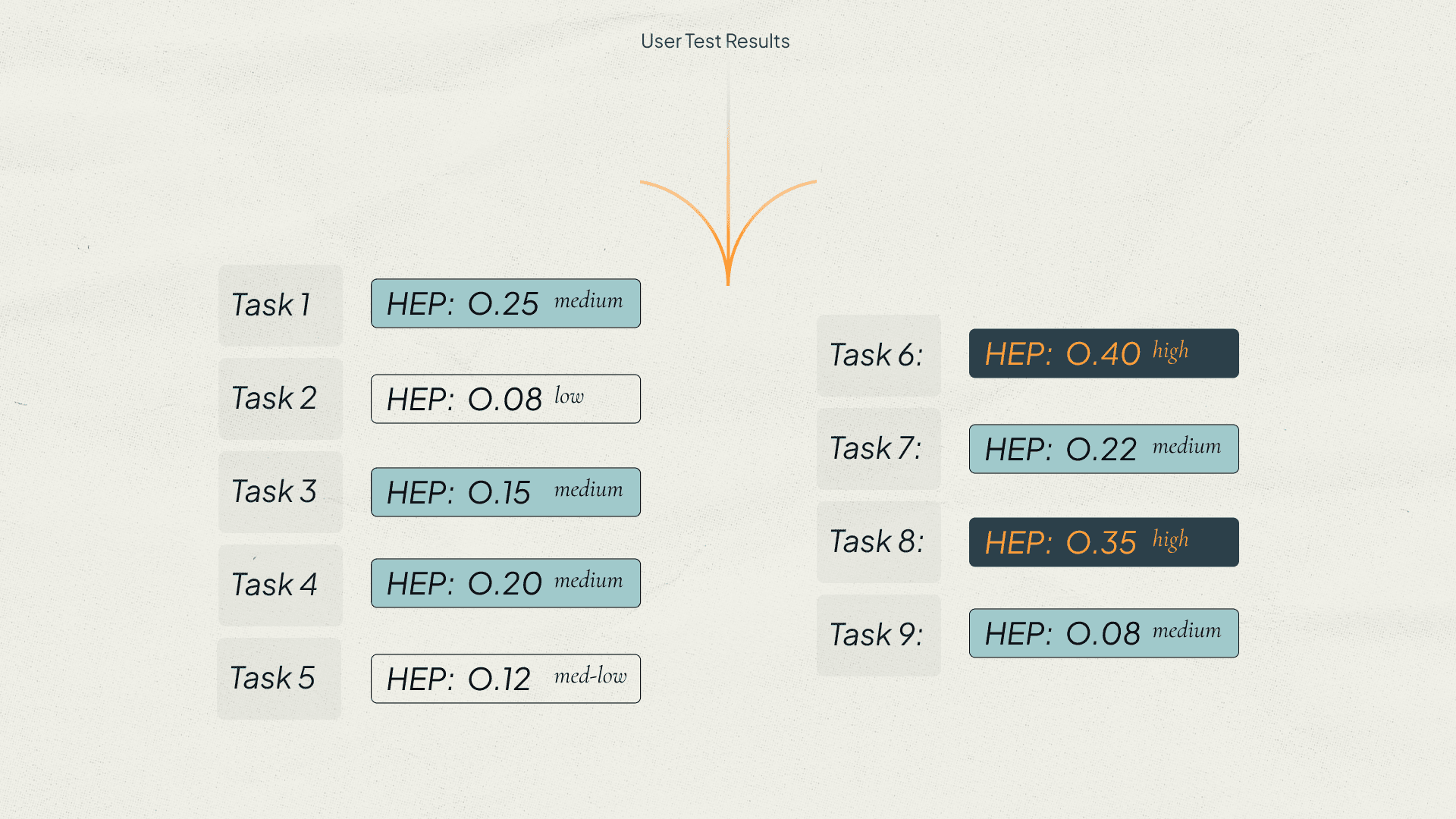
We also discovered that while participants understood the purpose of the Lune, many were not intuitively positioning their thumb in the intended area during initial testing, pointing to a critical gap between what the product communicated and how users actually engaged with it. We tested five participants across our first usability round, achieving an average SUS score of 71 against a target of 68, confirming baseline usability, with an average HEP score of 0.20 identifying specific interaction points still in need of refinement.


Design & Prototyping
Our guiding principle was awareness at every step: we knew our users might be grieving, overwhelmed, or entirely new to estate planning, and the design had to meet them there without adding to the weight they were already carrying. Every screen was built to provide enough guidance to move forward and enough clarity to feel in control, while destigmatizing the subject itself by framing estate planning as a milestone a family completes together rather than a task an individual dreads alone.
Development & Implementation
The most structurally significant implementation work was the handoff between the asset holder after passing and the executor when gaining authorized access and begins the transfer process to beneficiaries. Getting this right required us to design for a future state the asset holder will never see, which meant every decision made during setup had to be detailed, confirmed, and locked in with confidence.
The Lune, was central to this: biometric authentication through the device gates any meaningful change to the platform, ensuring that updates are intentional, secure, and verified by the person whose assets are at stake. The UI was built in Figma and brought to life as a functional web experience in Framer, with the physical Lune prototype fully paired and functional during testing. Participants placed their thumbprint on the device, received haptic and visual feedback, and moved forward through the interface in a single connected flow.
Testing & Optimization
We tested participants ranging from 18 to 80 years old, deliberately spanning that range to ensure the product worked across hand sizes, gender, levels of legal literacy, and varying familiarity with digital platforms. We observed where people hesitated, what language confused them, and how they responded to the physical product in a home context. One of the most useful findings came from asking participants about customization: people wanted the Lune to live in their homes as a decorative object unique to their family, not a generic tech device. That response directly shaped our revenue model, making aesthetic customization and tiered storage a core part of the product offering rather than an optional add-on. Each Lune is designed to be passed down generation by generation as a heirloom that carries the digital legacy it was built to protect.

Solution
With our research findings as the foundation, Ciel was designed to make one of the hardest conversations in a family's life feel possible, and to make the process that follows it feel manageable.
Prepare Assets on Your Time
Asset holders can begin securing their physical and digital assets as early as they choose, developing instructions and assigning messages to each recipient at whatever pace fits their life. There is no deadline, no pressure, and no single sitting required.
Guided at Every Step
The system walks users through their documents, asset categories, and assignments with contextual guidance, so they always know what has been completed, what remains, and what to do next.
Secure Transfer Through Biometric Authentication
The Lune verifies authorized users at every meaningful decision point, ensuring that the asset transfer process is accurate, protected, and initiated only by the people who are meant to carry it forward.


Results
We measured what participants did inside the interface. Where they paused, what they reached for, and where they stalled confirmed what design decisions we made in response to our research findings had landed.
AI That Puts People First
Many people approach AI with fear about what it might take away. This project demonstrated what it looks like when AI is built to give access, clarity, and agency over decisions that affect the people you love most.
Clarity When It Matters Most
Participants who had personally navigated a family member's estate without a structured system recognized immediately what Ciel would have changed for them; straightforward guidance, visible progress, and clear next steps in a process defined by uncertainty.
Users learn better with an uninterrupted experience.
The executor's role is one of the most emotionally and logistically demanding experiences a person can face in grief. Participants who had lived that experience firsthand said Ciel would have made it significantly more manageable to deal with the chaos that compounds the weight of loss.


